
 admin
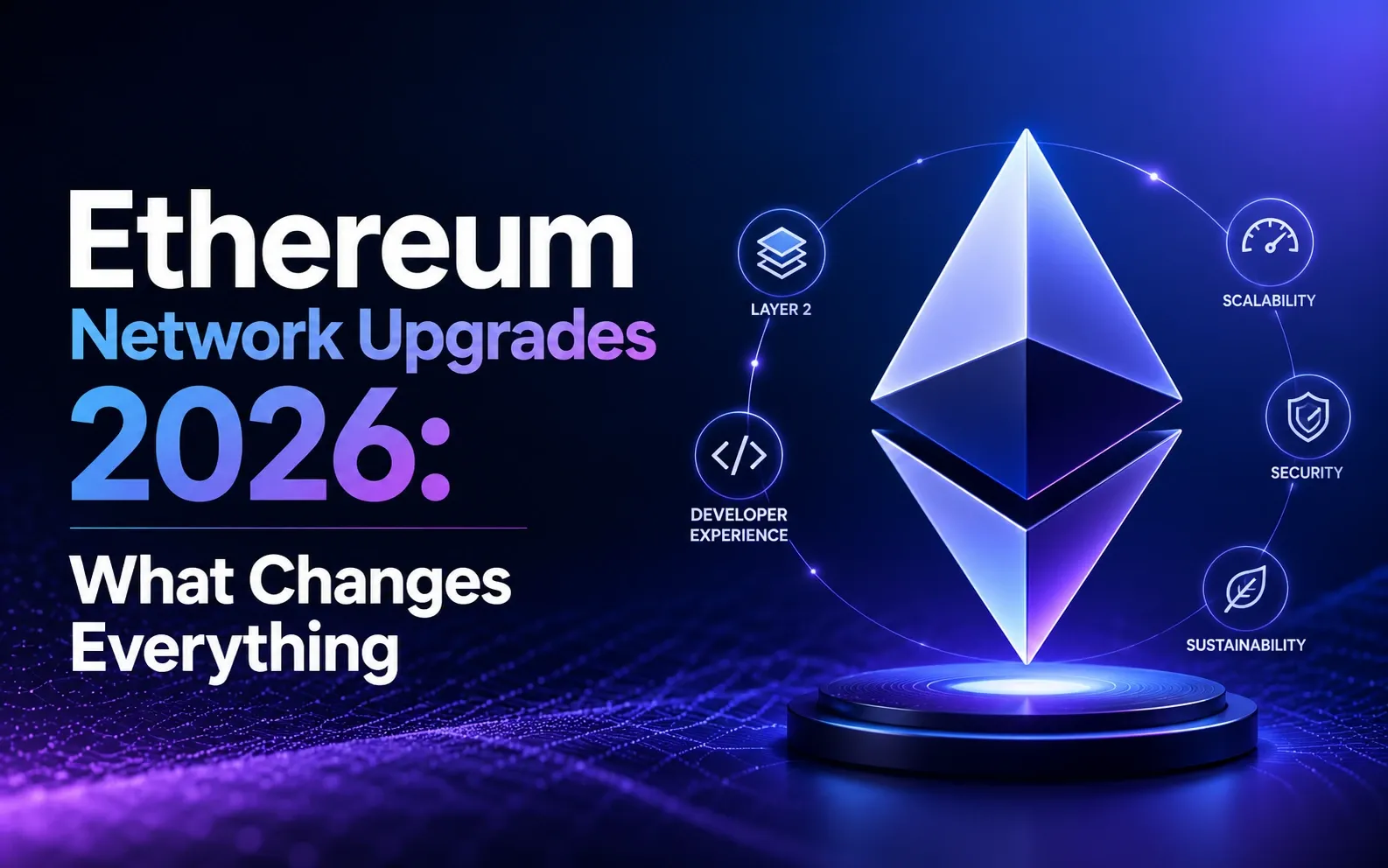
admin Ethereum doesn’t stand still. Every year, the network evolves — and 2026 is shaping up to be one of its most significant years yet. The ethereum network upgrades 2026 cycle is bringing real, meaningful changes that affect everyone from casual ETH holders to full-time blockchain developers. Whether you care about lower fees, faster transactions, or a more secure network, there’s something in this upgrade cycle for you.
This guide breaks it all down in plain English. No jargon walls. No hype. Just a clear, honest look at what’s changing and why it matters.
What Are Ethereum Network Upgrades and Why Do They Matter
Ethereum upgrades aren’t random patches. They follow a carefully managed Ethereum development roadmap, driven by core developers, researchers, and the wider community through a process called Ethereum Improvement Proposals — or EIPs. Each proposal is debated, tested, and only included in an upgrade if it genuinely improves the network.
These upgrades matter because Ethereum is infrastructure. Millions of people use it for DeFi, NFTs, stablecoins, and real-world asset applications. When the protocol improves, every app built on top of it benefits. Holders, developers, and validators all feel the impact — sometimes immediately, sometimes over time. Understanding what’s coming helps you make smarter decisions about how you use and hold ETH.
The Biggest Ethereum Upgrades Expected in 2026
According to a detailed breakdown of upcoming Ethereum changes in 2026, the network is moving toward a rollup-centric architecture that prioritises scalability, lower costs, and stronger security. The ethereum network upgrades 2026 cycle builds on the groundwork laid by the Dencun hard fork and pushes Ethereum further into its modular era.
Here’s a closer look at the five biggest changes you need to know about.
The Pectra Upgrade and What It Introduces
The Pectra upgrade Ethereum explained simply: it’s a combined execution and consensus layer upgrade that bundles several EIPs into one coordinated release. Pectra focuses heavily on improving the validator experience and expanding smart account capabilities through account abstraction. One of its headline features is raising the maximum validator stake from 32 ETH to 2,048 ETH — which dramatically reduces the number of active validators needed while maintaining security. It also introduces smarter wallet logic, allowing users to pay gas fees in tokens other than ETH. For everyday users, that’s a genuinely big deal.
Improvements to Ethereum Blob Transactions (EIP-4844 Followups)
Ethereum blob transactions were introduced with EIP-4844 during the Dencun upgrade and immediately cut Layer-2 costs by up to 90%. In 2026, the focus is on building on that success. Ethereum EIP proposals 2026 include increasing the number of blobs per block and refining the blob fee market to make pricing more predictable. Blobs are temporary data chunks that rollups use to post transaction data cheaply to the mainnet. More blob capacity means more throughput for Layer-2 networks and even lower costs for users transacting on rollups like Arbitrum and Optimism.
Validator Experience and Staking Changes
ETH staking improvements are a central theme this year. The Pectra upgrade streamlines how validators join and exit the network, reducing the onboarding queue that has frustrated new stakers. Consolidation of validators also means the consensus layer can process attestations more efficiently — improving ETH network performance 2026 across the board. If you want to understand the mechanics behind all of this, our guide on how Ethereum staking works is a great starting point. These Ethereum validator updates make running a node less demanding and more accessible for a broader range of participants.
Ethereum Consensus Layer Refinements
The Ethereum consensus layer is getting a quiet but important set of improvements this year. Upgrades targeting single-slot finality — the ability to confirm a transaction as final within a single 12-second slot — are progressing through research and early implementation stages. Currently, finality takes around 15 minutes. Improving Ethereum finality speed would make the network feel dramatically faster at the application level. Proof of stake Ethereum changes in this area also include better fork-choice rules, which reduce the risk of short-lived chain splits and improve overall network reliability under high load.
Smart Contract and Developer-Side Improvements
Developers are getting better tools and a more flexible execution environment in 2026. Improvements to the Ethereum Virtual Machine (EVM) include new opcodes that make smart contracts cheaper to deploy and easier to audit. These changes directly support real world asset tokenization on Ethereum, which requires reliable, low-cost contract execution at scale. Account abstraction developments also give developers more freedom to build user-friendly onboarding flows — removing the friction that has historically made Web3 apps harder to use than their Web2 counterparts.
How These Upgrades Affect Everyday Ethereum Users
If you’re not a developer or validator, you might wonder what any of this means for you. The honest answer is: quite a lot. To understand the baseline, it helps to have Ethereum gas fees explained — because fee reduction is one of the most tangible benefits of the ethereum network upgrades 2026 cycle for regular users.
The Ethereum upgrade impact on users breaks down into three areas. First, lower costs — blob transaction improvements mean Layer-2 fees stay cheap even as usage grows. Second, faster experience — Ethereum scalability improvements and finality speed upgrades mean your transactions confirm more quickly and reliably. Third, easier access — account abstraction lets you interact with dApps using smarter wallets that don’t require you to hold ETH just to pay gas. DeFi users, NFT collectors, and anyone moving assets on Ethereum will notice these changes in their day-to-day experience.
What Ethereum Developers and Validators Need to Know
If you’re building on Ethereum or running a validator node, 2026 requires some preparation. The EVM changes and new opcodes mean some existing smart contracts may behave differently after upgrades activate. Developers should review their contracts against the latest EIP specifications and test on testnets before mainnet activation dates.
For validators, the Pectra upgrade’s consolidation feature is opt-in but worth serious consideration. Consolidating multiple 32 ETH validators into a single larger stake reduces operational overhead significantly. If you’re ready to act, our step-by-step guide on how to stake Ethereum step by step covers everything you need. Stay subscribed to Ethereum’s official blog and client team announcements — upgrade timelines can shift and missing a deadline has real consequences for node operators.
Frequently Asked Questions About Ethereum Upgrades 2026
Will the 2026 Ethereum upgrades affect ETH price?
Upgrades don’t directly move the price but they do drive network activity — and activity drives demand for ETH. More scalability, lower fees, and better developer tools attract more users and applications. Historically, major upgrade cycles have coincided with increased market interest in ETH. That said, price is never guaranteed and always depends on broader market conditions.
Do I need to do anything as an ETH holder?
For most holders, no action is required. Ethereum upgrades activate automatically at the protocol level. You don’t need to migrate funds, swap tokens, or update a wallet. The exception is if you’re running your own validator node — in that case, you’ll need to update your client software before each upgrade activates.
What is the difference between a soft fork and a hard fork?
A soft fork is a backward-compatible upgrade — old nodes can still participate even if they haven’t updated. A hard fork is a breaking change that requires all nodes to upgrade or risk being left on a separate chain. Most major ethereum network upgrades 2026 changes are implemented as hard forks, coordinated carefully so the entire network transitions together. For more on the consensus mechanics behind this, read our explainer on proof of work vs proof of stake.
Final Thoughts on Ethereum’s 2026 Upgrade Roadmap
Ethereum is evolving fast and the direction is clear — cheaper, faster, and more accessible for everyone. The ETH protocol changes rolling out this year aren’t experimental gambles. They’re the result of years of careful research and community collaboration. Whether you hold ETH, build on it, or validate the network, staying informed puts you ahead. Keep watching the roadmap — the best upgrades may still be ahead.



![What Is Crypto Market Sentiment Analysis? [2026 Guide]](https://cryptomark.co.uk/wp-content/themes/vinkmag/assets/images/default_thumb.jpg)

 Bitcoin
  Ethereum
  Tether
  BNB
BNB  XRP
XRP  USDC
USDC  Solana
  TRON
TRON  Figure Heloc
  Lido Staked Ether
  Zcash
Zcash  Hyperliquid
  Dogecoin
  Monero
  USDS
USDS  Wrapped stETH
  WhiteBIT Coin
  Chainlink
  Wrapped Bitcoin
  Cardano
  Binance Bridged USDT (BNB Smart Chain)
  LEO Token
  Wrapped Beacon ETH
  Rain
Rain  Stellar
  NEAR Protocol
  Wrapped eETH
  Bitcoin Cash
  Litecoin
  Ethena USDe
  sUSDS
sUSDS  Canton
  Uniswap
  Coinbase Wrapped BTC
  Avalanche
  Dai
Dai  Blockchain USD
  Sui
Sui  WETH
WETH  USD1
USD1  Hedera
  Gram (prev. Toncoin)
  USDT0
USDT0  Bitway
  Quant
Quant  Tether Gold
  Global Dollar
  Shiba Inu
  Bittensor
  Cronos